
What I Learned in a Room Full of the Smartest People in Sports Social

Some of the earliest social media hires in sports are now VPs and SVPs. Social media and content have always been inextricably tied to the underlying business and brand for sports organizations, but for years their impact was mostly acknowledged by vibes. Then likes, impressions, and views added a more data-driven and analytical bent.

Today, an organization’s social media and content strategy isn’t expected to deliver likes and comments, the expectation is to drive direct impact on key business objectives.

With such a lofty ascension, there are better questions being asked, more operationalized workflows, more documented guidelines and guardrails, and more thoughtfulness behind every post, piece of creative, and word that gets in front of fans. The ever-increasing fan touchpoints, an insatiable demand for content, and the realization that social media is where organizations can learn about their fans, grow the fan base and brand, and create new marketing funnels and revenue streams — the level of sophistication and discourse has never been higher.

These were among the key themes at this year’s second annual Gondola Sports Summit, which brought together the leaders and producers who bring sports fans all the content, copy, memes, and more that drive such engagement and earned media — and further key organizational objectives.

I was fortunate to attend the conference, which took place in Denver, May 19-21, and featured speakers from several of the biggest teams and leagues in sports, agencies that work with these organizations, and representatives from many of the platforms where fans consume and converse around all that content. There were countless insights and examples, inspirational stories, revelatory ideas, and warm camaraderie. What follows are a few actionable insights from the panels, which built on the theme of social media and sports growing up. We’ve raced well past the tropes of interns, the power of content and social being recognized and appreciated for all the value it can deliver.

What the sports world needs to know about Reddit

Reddit has kind of been having a moment, and not just in sports. It’s increasingly one of the last true large ‘social’ broadcast platforms left, a place where businesses and brands can get unfettered insight into what fans are saying, and more tied into the information users get, whether querying AI or Google.

Sports are not new to Reddit; there have been tons of engagement and conversation happening on various subreddits for years. But now the teams and leagues themselves are taking notice. Reddit’s Sports Partnerships Lead Christine Wixted Wixted sat on a panel alongside MLB’s Vice President, Social Media & Innovation Cameron Gidari , and they discussed some of the use cases and value props for the platform.

  • Reddit is a text-heavy platform, because it’s about conversations. But that doesn’t mean photos and videos don’t have a place, multimedia can start and lead those conversations.
  • Anyone (including brands) can be welcomed when they provide value. For teams and leagues, that can mean content they’re not getting elsewhere. Don’t just post the highlight, post a unique camera angle or clips that’ll elicit conversation.
  • Niche down. This will come up again later with TikTok, but with the specific, interest-based nature of subreddits, there is opportunity to engage with non-sports communities. MLB mentioned their success posting in the weather subreddit, for example. AMAs (Ask Me Anything) can also be compelling ways to serve different niches; for example, could your head groundskeeper interact with the landscaping subreddit about caring for the grass at an MLB or NFL stadium? (my example!)
  • AMAs were brought up multiple times by both Wixted and Gidari, and Wixted mentioned ongoing development of the platform’s AMA product. That’s a telling sign! Gidari talked about the success of having AMAs with MLB’s team-specific beat writers, offering deep engagement and conversation when, for example, the Cubs beat writer does an AMA with the Cubs subreddit (again, my example). This is an easy but effective way to get started on Reddit.
  • You can get value from Reddit even if you never post. Wixted echoed what many marketers will say, characterizing Reddit as your free focus group. Lurk and listen, and, as Wixted recommended, leverage Reddit Pro — which is free, to set up listening flows to keep track of your brand and sport, and spot opportunities for engagement or pick up insights about your fans or potential fans.
  • You don’t need to worry about constantly feeding Reddit. It’s not as algorithm-driven as other platforms (posts primarily gain visibility through comments and upvotes), so you can pick and choose opportunities instead of stressing about a 24/7/365 presence
  • If you’re anxious or uneasy about treading into Reddit, where it’s true that brands are not always a welcomed presence, work through the subreddit moderators (or connect with the mods through the Reddit partnerships team)
  • Wixted talked through some of Reddit’s near-term priorities and roadmap, so pay attention. She mentioned: Continued devleopment and evolution of their video product, improving their mobile app UX, further development of their AMA product (such as scheduling, RSVPs, video answers, activation within AMAs), building more publisher tools and verifications, and enhancing the live event experience with features like live stats, polls, custom flair, and game highlights (my note: just check out the r/CFB subreddit on a college football Saturday, for example!).
  • My personal Reddit experience (from running Slyke) — the organic opportunity (and paid) is very real. Definitely be mindful of posting as a brand, you may share the same content under a non-brand handle. Think about posts that will start conversations, and note that users are willing to click off to a link to consume content that’ll funnel back into the conversation on the thread; I’ve had posts reach millions and drive considerable clicks. I’ve also found cost-effective ads (but be mindful of objectives). And do your research — Reddit Pro and Gummy Search can be helpful, jumping into subreddits and searching them or filtering by Best/Hot/Top over different time periods, and test different posting formats (link, text-only, carousel, video, etc.). I’ll also note, for a verrrry small marketer like myself, the Reddit ads team is extremely help and hands-on

Learning from the SMSports OGs

Depending on when you mark the unofficial start of the social media x sports era, the field as a profession is about 10-15 years old. It really did start with entry-level staff and, yes, some interns. The first pros whose job it was to write tweets, hit publish on Facebook, and navigate the early days of social media have grown up in the space, many in senior leadership or still hanging around the industry otherwise, continuing to evolve with it.

A few of these ‘OGs’ hit the stage to reflect on the past, analyze the present, and lend insight and inspiration to those coming up and molding the next era now.

  • “Likes don’t pay the bills.” Justin Karp , an OG now at NBC Universal, isn’t the first to utter that phrase, but it captures the elevated place of social media in any business now. Counting engagements is fine, but now we have to ask ‘so what?’ multiple times in planning add measurement to ensure those engagements and that reach is connected to business goals. That could mean reaching certain audience, driving home messaging, gaining actionable insights and feedback from fan engagement and comments, tying to sales, affecting recruiting outcomes and interest (for college sports), and driving tune-in, subscriptions, sign-ups, etc.
  • Platforms and what content and packaging work on said platforms change. So audiences. The point is you always have to be mindful of evolving, an insight elucidated by the Las Vegas Raiders’ Gavin Rivera. Learn to love the space as a science to continually study.
  • There are still only 24 hours in a day and yet an ever-growing supply of content and options competing for that attention. So everything has to start with a compelling story. Regardless of mediums, platforms, and presentation, the story must be one worth telling.
  • Rivera demonstrated decisiveness, explaining that we must fully comprehend the brand of the organization and know how to implement it across the board. You should be able to articulate the ‘why’ behind every post, heck, every word, and edit. The industry has grown up.
  • Karp has spent a lot of time and effort to drive tune-in with live sports broadcast by NBC and its platforms. And a key insight, with broad implications for sports pros, is that sports fans have passions and interests beyond sports. They follow whatever stories, memes, and trends are popping in areas beyond sports. So how can you ensure your game feels culturally relevant, significant enough to command engagement and attention by the biggest audience?

Lessons and ROI with Losing Teams

“Don’t read the comments” was never a good idea. Sure, there is bound to be vitriol and salty language, especially in the lean times for teams, but there is no better way to hear from your fans at scale than social media. It’s a constant source of feedback and vibes, in general and for specific content and campaigns.

If you sift through riff-raff, there is gold in all those fan voices and finding those insights is another way the social media team can deliver meaningful value up to the c-suite. This was one of themes at the conference overall and in a discussion featuring social media and content leaders from the Chicago White Sox (Tim Brogdon ), Carolina Panthers (Alex Grant), and Diana Smith (Charlotte Hornets), three teams from three different leagues who share this one thing in common — their teams have suffered a spate of losing seasons, of varying degrees, in recent years.

  • Remind yourself that the fan sentiment expressed on social media is often unrelated to your performance as a content and social media team, it’s the team performance they’re peeved about. Don’t get down about all the aspersions, but do look for patterns and opportunities within it. When you do something, creating content or commenting, for example, that shows fans you’re listening and addresses a common sore spot, that goes a long way.
  • What do you do when the season is shot? It’s tough when fans can all recognize that this team just ain’t going to win much, let alone contend this season. The advice for this issue included maximizing the effort around things that fans are excited and feeling positively about. That could mean schedule release, the draft, free agency, training camp, fan traditions and community. You may recognize storylines that fans are interested in; if so, build on that.
  • If it’s driving behavior, the content is valuable. Fans may not want to hear from you as much amidst losing, but don’t necessarily take negative sentiment or even lower engagement to automatically mean the content didn’t work. Pay attention to other metrics like sends/shares, watch time, and reach, too.
  • Coaching up is an important skill. You need to be able to communicate and explain strategic decisions to senior leaders and execs in various departments. If you post less, those preseason engagement and growth goals are not gonna be reached. If we want our social media to be among the best amongst our peers, here’s what that’s going to take and why it makes sense. The White Sox’s Brogdon also spoke about high-level conversations about how the team’s self-awareness and even use of memes would help shift the public narrative a bit, and deflect negative attention on the team to more positive attention on the social media team’s approach.
  • ‘Some ideas are worth waiting for.’ This paraphrase, via another paraphrase from the Hornets’ Smith was about not tossing aside ideas when fan sentiment is low, but saving some of them for when the right time comes. Talk to any staff at losing teams and there’s a good chance they have some ideas for content or even strategic direction for when the team becomes a winning one.
  • Brogdon talked about developing a Whtie Sox fan persona, which guides core strategy and decisions, and enables more thoughtful conversations around the team’s approach. Overall, the panel has a good handle on documenting voice, tone, and brand guidelines, so everyone knows the gospel guiding the strategy and post-to-post decision making.
  • This panel and others discussed non-traditional KPIs. Engagement is great, but there is so much more value to be tracked and framed. The Panthers’ Alex Grant even mentioned how player comments on content and their feedback as a good sign. As noted earlier, using social listening and comments to drive actionable recommendations and insights, whether based around fan experience [a pain point at the game], reaction to an activation or promotion, or an emerging affinity. Consider community development goals, too. When fans are starting their own conversations and conversing (hopefully respectfully!) with each other, that’s a good sign. If it starts to feel like the team and its fans have inside jokes or their own language, that’s pretty cool.
  • STN Digital’s David Brickley went into what we mean when we say ROI. Understand the true objective — there is a difference between a marketing and a sales campaign, he said. Not everything is about sales, the objective could be community growth, reaching a specific demo, etc.

Live Coverage and Content

Content producers and leaders from three very different leagues and sports, NASCAR, MLB, and the PWHL, spoke about covering events/games and getting content to the feeds quickly (and why that matters).

  • Major League Baseball games are full of highlights. They can’t always predict when they’ll be a an incredible defensive play or a monstrous home run, but when it happens they want to own the moment and get it out quickly. MLB’s Brett Blueweiss said the goal is ‘field to feed’ in two minutes, and noted they typically have three different angles to share to make the most of the moments. An over-arching theme was the value of sharing unique content. Plenty of accounts can post the broadcast highlight, but what is the content that only YOU have?
  • While most sports events take place with fields and courts that are circumnavigable, NASCAR’s Alejandro Alvarez knows he and his content producers can’t possibly be everywhere in their massive speedway venues. So it helps them to be a bit more intentional about the content they want to capture and why. The overall goal, he said, is to convey the visceral experience of being at the race and all the energy and atmosphere of the event.
  • Both Blueweiss and Alvarez said that data often shows that mobile content (phone-captured) performs better than more polished content shot with more professional video/photo equipment. It looks more like real life, so it’s more relatable, they surmised. Alvarez said the memorable line that ‘the best camera is the one in your hand,’ whether that’s a DSLR or an iPhone. But also be smart about it, recognize the moments where one device or the other makes more sense. Overall, showing the data can also help destigmatize any qualms about phone-captured content that some may harbor.
  • There’s always risk of montony. Sports are about routine, by design, so content can get stale if every game day looks virtually the same with the live content captured. Some of the recommendations to combat this included giving your on-the-ground content creators some agency to roam around the venue to find unique angles or scenes. And let these talented producers try new things, they can bring good ideas to the table. Even small tweaks, too, can make something feel fresh for fans.

The Perfect Couple: Design and Social

Design and social media are inseparable. The best marriages can make 1+1 > 2, with creative that syncs with the content and copy to enhance fandom and enliven an intentional branding. Every good marriage requires communication, honesty, and compromise, and the discussion among design and social pros from the University of Tennessee’s Athletics and the Atlanta Falcons was full of helpful tips and insights.

  • Distinct creative looks and techniques are ownable, and can augment brand identioty and equity, stated the Falcons’ Director of Social Media and Influencers, Ryan Delgado .
  • Tennessee’s Evan Ford explained how the Vols (Volunteers) have creative boundaries around a sandbox in which colleagues can play. This helps maintain integirty while not stifling creative riffs among the school’s many teams. The Vols’ Kellen Hiser (Assistant AD, Digital and Creative Strategy) said that knowing the why behind creative elements and decisions can help inform playing within the guardrailed sandbox and guide future asks, too.
  • In a nod to the potential for numbness and montony from otherwise awesome creative, there were recommendations about. how small tweaks can mitigate such risks. That could be changing up the font or composition on the creative, or even just the presentation; a new approach to carousels or Reels covers, for example, or a different introductory frame for a Stories post.
  • Game days can move rapidly (of course!), so it helps to prepare and plan from a content and creative perspective, too. That means scenario planning, so all sides are ready for potential moments. It’s also good to know who is supposed to be where and when, so when content happens, someone is in the right place at the right time, and the director leading the content execution knows who to call on for the content.
  • A subtle but important point of discussion was honing the creative process from all sides. It can make a big difference when a request or brief is well-written and an informed, reasonable timeline is provided. Knowing how to give and receive feedback are underrated skills. And don’t forget to ensure all sides know the purpose of the creative, how will it be used and why (and if it goes unused, why was that the case?). Close the loop on performance and feedback, that’s a complete creative cycle.
  • You can win with consistency. Not every post or piece of creative needs to be a home run, consistently hitting singles and doubles can drive consistent impact.
  • I just loved the Falcons’ Jack Ozmer (Graphic Designer) talk about crafting a team identity that’s consistent across visual and voice. That’s the crux of a lot of this synchronization and synergy of design and social, helping to build that cohesive brand.

TikTok Tips

TikTok continues to be a force in social media and no other platform has been more valuable in broadening the scope that sports can penetrate. The discussion on the TikTok panel was centered around March Madness and creators, and was packed with insights for general application, too.

  • Search and intentional discovery remains a big priority for TikTok. The moderator of the panel, Kenny Yansen (TikTok leads for sports broadcast partnerships) showcased the key ways the platform activated around TikTok and the tournaments’ hub and search were front and center. TikTok in general remains a major search platform and it appears they’re continuing to lean into that behavior. When was the last time you searched your brand, team, or partners?
  • Bleacher Report’s Louise Chouinard (Senior Producer, Field Content) articulated their approach to TikTok, embracing a culture of experimentation. And not all good ideas will hit on TikTok the first time you post them. Sometimes posting a second or third time, with or without tweaks, can hit. She also noted the opportunity to experiment and ‘flood the feed’ during those high times, such as during March Madness. Some of that creative spaghetti will stick, reach new audiences, and inform future practices, too.
  • Content creator and former pro basketball player Trey Phils (and Yalie!) advised to not be afraid to flop. You just have to post. Get reps and try stuff. One of the features of TikTok your content doesn’t get automatically served at scale to users, let alone followers. Only the good content does. The bad content barely gets seen by anybody, so don’t sweat the flops. If you trip and fall while walking and nobody’s around to see it, who cares? (my example there, haha)
  • When you work with creators, select creators whose style and content fits what you (and the brand) are seeking, said Chouinard. Then let them cook. If you try to force something that deviates from the creator’s content style, that’s not good for anyone.
  • Lean into niche when you can (and when it’s relevant). TikTok has ‘unmatched discoverability,’ said Chouinard. Oftentimes niche sports or niche topics can over-perform, so look for those opportunities and lean into it. She cited an example of an interview with Stephen Nedoroscik (the bespectacled pommel horse hero for Team USA Olympic men’s gymnastics team) in which his love for the video game Rocket League came up. TikTok did its thing, getting that content to Rocket League aficionados on TikTok and the post took off.

The Growth and Opportunity of Women’s Sports, Athletes, and Content

No sports industry event can take place without a discussion about women’s sports. The growth is undeniable, the athletes influential, and it feels like we’re still just getting started.

  • One of the content motifs that came up as a propellant, with benefits for women’s and men’s sports and cultural relevance was athlete collabs. That could be across teams in the same sport, teams in the same city, teammates together, or no natural connection like that at all. Numerous female athletes have wider reach on social media, and many are just better at social, even if the teams and leagues foir which the male athletes’ have bigger overall fan bases, for the most part, which means both sides stand to gain. Audiences can multiply quickly with collabs.
  • Women’s sports athletes are inviting new brand categories and activations into the fold. Beauty and feminine hygiene brands, for example, now have a natural platform in sports that’s growing in scale, and these athletes are creating new opportunities through content like GRWM (get ready with me). Women are, in general, more willing to be vulnerable on social media, which makes them more relatable to fans, and more effective and authentic brand ambassadors.
  • There is a tangible shift in the way brands play within women’s sports, too. While in the past their activations often came across as patronizing, like an act of charity. Now, it’s more about celebrating women’s sports and the athletes as legit superstars performing impressive athletic achievements.
  • Fans of women’s sports are fans. They’re often more vehement and even tribal, which helps create a valuable platform for women’s sports. When other leagues/teams or brands engage authentically with women’s sports teams and athletes, these tribes often come with them, and bring their passion and devotion.

Understanding, Activating, and Community Building with Fans

It’s easy when you’re the legacy team account. (Okay, not easy, but stay with me) But how do you become a relevant presence for fans when you’re a media outlet, an upstart content and competition company, or even a multi-trillion-dollar corporate brand? There some insights and ideas with broad applications that I picked up in a discussion with the pros helping to engage communities and fans for ALLCITY Network, Overtime, and Microsoft.

  • ALLCITY’s Parker Sperry (VP of Partnership Marketing) spoke about how ALLCITY, the parent company behind localized media companies (DNVR, PHNX, among others) thinks about serving fans throughout their gameday journey. From pregame to in-game to postgame, what can they do to engage their fans and add value?
  • Sperry also spoke about positioning their talent to be brand ambassadors, in addition to how they work with creators. They want to offer fans something unique, so they’ll oftne let their creators try ideas in the moment and overall think about formats that are outside the box. They’re not trying to be traditional media.
  • Overtime’s Mike Kaufman (Director of Social Strategy) appreciates the platform they have and the communities they can create and serve. He discussed the importance of listening to and learning from athletes (and their parents) to better serve them. He also spoke about discovering communities they can help, using their platform to fill programming gaps and serve those communities fans fans.
  • Microsoft’s Joey Maestas , a social media and sports vet who today helps Microsoft market its AI as Social, Influencers & Video Lead for Copilot. In devising strategy, the north star for him is to consider what use cases would their audience care about? That guides the creators they work with (and how), the activations they produce, and the content they create.

A few more

Not everything fit in the sections above, so here are a couple other things that stuck with me.

  • It’s always instructive to pay attention to what the major platforms advise, so we were all at rapt attention when Meta addressed the crowd. Kristen Oh (Sports Partnerships at Meta) shared a breakdown of Instagram’s many products, and how organizations can think about using each. While nothing is absolute, the overview included: Utilize the feed for curated highlights, Stories for ephemeral moments, short and entertainment-focused videos for Reels, go Live and be interactive with fans, and connect with core fans (in general, for specific events, for sub brands, for athletes) in Channels.
  • Meta also reviewed Threads. It’s no secret that adoption and engagement on Threads is a big priority for Meta right now, and it was informative to learn how they speak about Threads and the frameworks for success on the platform. View the linked image for the full slide summing up the big ideas, but in brief they presented 4+ recommendations to build a community and engaging presence on Threads. 1) Post authoritative content like highlights and behind-the-scenes, 2) ‘Own the moment’ by sharing content that makes a statement or echoes what fans are feeling, 3) Tap into creators and commentators by developing ambassadors and elevating community voices, 4) Drive Community engagement by empowering everyday fans. Ultimately, consistently engage with fans and with the community, and that’ll go a long way on Threads.
  • STN Digital’s David Brickley cited the old cliche ‘Your network is your net worth.’ But it wasn’t just about how who you know helps you get hired at your next job. It’s about being able to make things happen, too. He’s right in it, as a founder and leader of an agency, but he added another framing to the old aphorism, if there’s a big activation or content campaign to execute, do you have the rolodex of trusted agencies or freelancers to call into action? Building that network is valuable, particularly as you ascend. to more senior roles.

That’s over 4,000 words above. If you made it all the way here, whether you read this in a single sitting or sections at a time, I hope you feel smarter having learned what I learned. Since there is so much, here are some of the lasting themes and insights to ensure you take with you:

  1. Social has grown up — from “vibes” to a strategic, business-impact engine that drives tune-ins, ticket sales, sponsorships, marketing objectives and deeper fan insights.
  2. The communities for your content are broader than you think — Think beyond sports content and communities, and add value to others. Try sharing relevant content to niche subreddits and TikTok fandoms.
  3. Measure what matters — count engagements and views remain important, but aim to tie posts and performance to business goals (tune-in, brand messaging and pillars, marketing communications, community growth, brand affinity, partner activation).
  4. Empower your creators and colleagues — Formalize guardrails; the goal is not to micromanage, but invite safe experimentation, so creators, freelancers, and coworkers can unearth fresh angles and creative ideas.
  5. Content and Social are Strategic — Articulate the why behind the strategy, content, and creative. Decisions and direction should make sense because they align with the why.
  6. Experiment without fear — on TikTok and beyond, embrace rapid “fail fast” iterations; only the best content surfaces, so don’t sweat the misses. You may even reach communities you never thought about
  7. Lean into under-tapped fandoms — women’s sports, niche athletes and underserved communities hold high-value audiences hungry for genuine curation and context.

Somehow, this barely scratches the surface of all the knowledge to gain and stories to hear from the presentations at Gondola. Not to mention all the conversations on the side and the relationships formed outside of the official sessions.

Thanks to the team at Gondola (led by the legend Jared Kleinstein) for putting together a tremendous event and to all the speakers for being so thoughtful and generous and energetic with their discussions. If you haven’t checked out the Gondola platform, I encourage you to check it out, explore the content and creators, learn about the features, and sign up for an account. Visit Gondola

And shoutout to my employer Greenfly, who got several unsolicited shoutouts from the guest speakers, praising our software and service for being so valuable to their content operations and ability to achieve business goals.

ESPN, Sowing the Seeds of Iterative Content, and Where the Avalanche of Social Media is Heading

We’re in the remix era of social media. Trends, memes, duets, reactions — a powerful seed of content begets a tree, which can turn into a forest. Content snowballs, with creators from across the world, in different communities, and from various subcultures, with original POVs, adding their unique take. No snowflake is alike, to complete the analogy, and AI-infused feeds seek to deliver the precise snowflake that’s perfect for you, the content that seems targeted to an audience of one — you.

So what’s a media behemoth, a decades-old brand like ESPN to do in this space, where they’re one of many voices on social, working with the same sports content and stories everybody else is? There’s no easy answer, but in many ways ESPN is spreading and discovering seeds, helping plant the trees across an array of diverse sports fan communities. I loved the way ESPN’s Senior Vice President, Original Content & ESPN Films Brian Lockhart put it on a panel at the ESPN Edge Conference [click to watch] in October 2022.

“How do we open source [a] story,?” he said. “Maybe deliver this to a different partner that has an authentic voice on a different platform. “That same piece of IP can have new life breathed into it and hit different for different audiences.”

For much of social media, user-generated content provides a lot of seeds. Whether it’s home videos, serendipitous discoveries of content, memes, and everything in between — fans are planting seeds all over. ESPN Vice President of Social Media Kaitee Daley applied a perspective related to Lockhart’s ‘open source’ idea in describing how they activate user-generated content and inviting diverse voices to put their spin on it.

“Nearly half of all media consumed is user-generated media,” Daley said. “This notion of someone down the street from me went and filmed their kid doing something incredible in the backyard and that’s going to perform as well on our channels as a really well-done highlight. When you think about how we approach that, sometimes I think people go ’Well that’s not innovative at all because anyone can do it.

“But what we’ve started to do on TikTok in particular is bring voices like Omar Raja to those moments. So we’re storytelling user-generated content in a different way and it’s made for that audience. They consume and they think ‘this is for me’ And that speaks to that inclusivity as well.”

So, yes, create your content and serve your fans. But also invite others to build off the content you produce or curate. When platforms like TikTok strive to deliver the exact right content to the tiny, exact cohort of users for which that video is a perfect match — trying to be everything to everyone is a losing battle by design. There are too many segments and sub-segments, communities, and sub-cultures — the forest is appreciated for its trees.

That’s one of my own key takeaways from hearing the insightful conversation on the ESPN Edge Conference panel.

20 Quick Sports Business and Social Media Nuggets, Insights, and Takeaways from the 2021 Hashtag Sports Conference

The worst parts of the pandemic appear to be over and sports are gradually returning to normalcy. Games are being played in front of packed venues and there is more than enough live sports programming to satisfy any fan’s appetite. But there have been and will be lasting effects of 2020 for the sports industry — new platforms, new fan behaviors, new opportunities and necessities. These themes permeated much of the conversation at the 2021 Hashtag Sports Virtual Conference this past June, one of many great industry events that Hashtag Sports holds.

I recommend you check out all the panels (they’re available on demand). You’ll digest some thought-provoking ideas and key learnings from the panels — here I present some of mine in the following 20 nuggets: 

  1. Don’t chase numbers, accomplish goals. In a conversation between STN Digital’s David Brickley and Shareablee’s Tania Yuki, a key point was to establish objectives and KPIs for social media strategy and campaigns and focus on those metrics as measures of success. Depending on the goals, there are successful scenarios in which the vanity metrics do not go up.  
  1. “Too much time is spent on finding the wins.” This quote came from Yuki, who noted there is a ton of insight to come from looking at the ‘losers’ among social media posts as there are the winners; perhaps even more. 
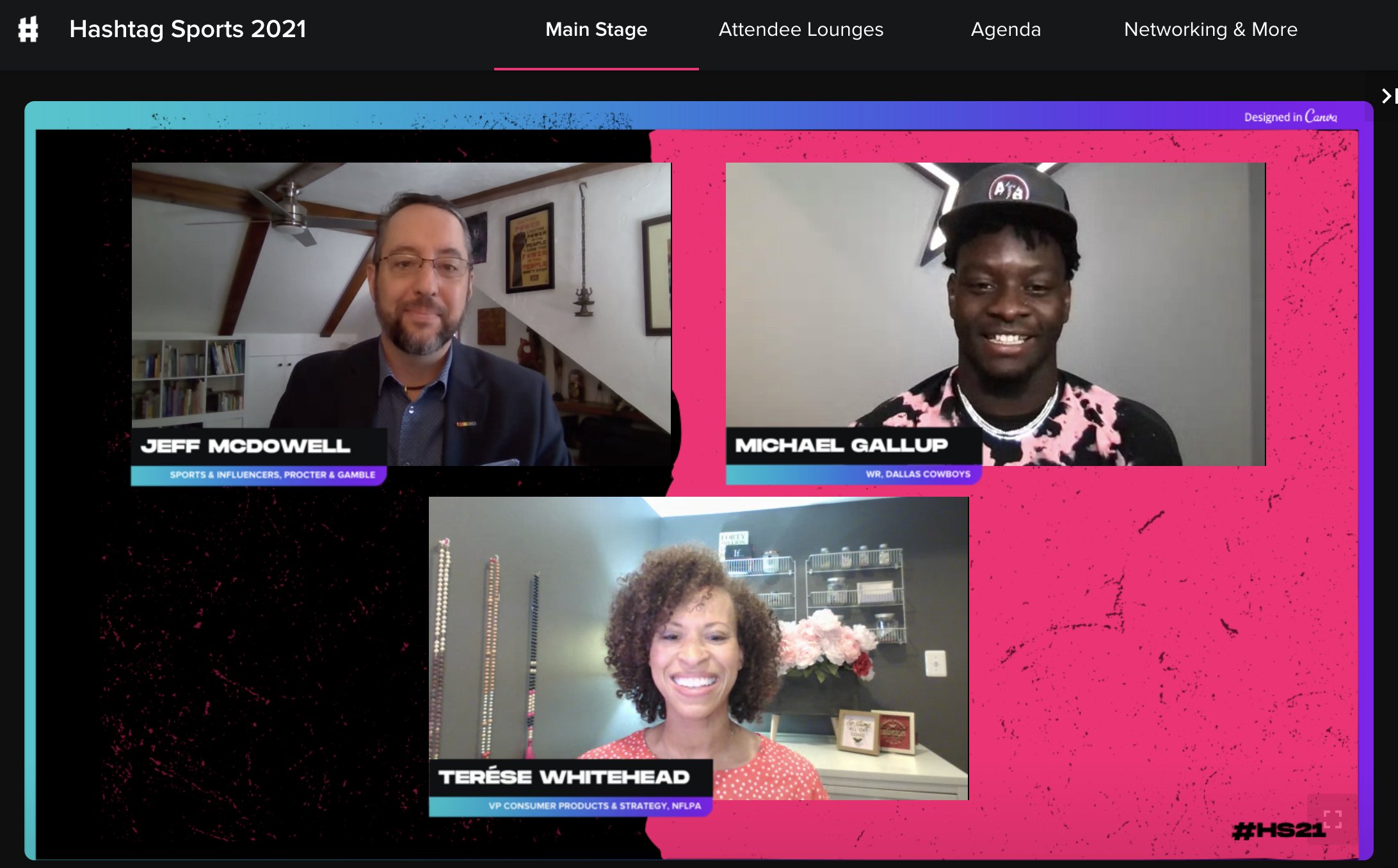
  1. On one of the panels, the moderator asked each speaker to name their favorite social media platform and why. For Dallas Cowboys wide receiver Michael Gallup, notably, it was Facebook. Why? It’s because it’s THE place for him and his partner brands to reach families. “Grandparents, aunts & uncles, (family) – you got everybody on there…” said Gallup.
  2. We see influencers partner and collaborate on platforms like TikTok and teammates often pairing up for podcasts for videos. But Los Angeles Chargers running back Austin Ekelter talked about his initiatives uniting athletes across sports for causes, collaborations, organizations, and events like Twitch streams and tournaments. If athletes across sports start working together more, the possibilities are endless…
  1. In discussing the last year and recent priorities, both Jared Harding (Denver Nuggets, Colorado Avalanche) and Nick Monroe (Milwaukee Bucks) named YouTube as an area of focus. They touted YouTube as a good way to reach new and broader audiences, so they’re programming for YouTube strategically.
  2. Greg Mize, Senior Marketing & Innovation Director with the Atlanta Braves, discussed the three criteria he and his team use when evaluating new digital/social platforms. There is the business case (how can this benefit the business?), the audience there (who can we reach?), and the resources required for success on the platform.
  1. In articulating his thoughts about TikTok, Mize characterized the content there with a thoughtful quote: “It’s the micro-highlight…It’s the highlight within the highlight.” A sharp summation about content like the bat flip and high-five resonating more than the actual home run (my line, not his).
  1. Portland Trail Blazers Director of Content Aaron Grossman talked about gleaning insights early on new platforms by getting feedback from the audience. “They say don’t read the comments, but with a new channel it’s important to [do so], to learn (what the audience likes).” The audience will often point to where you’re going right and where you’re going wrong.
  2. Grossman also cited the growth rate of the brand/account’s audience on a new platform as a key KPI to know if the team’s content is resonating and to evaluate the viability of the platform for the team overall.
  3. In discussing how teams can look at the ROI of social media, the Braves’s Mize talked about the long tail of fandom. “We believe firmly that creating engagement on social media will eventually have a long-tail impact on monetization…(We need to) build fandom through engagement.”
  4. Joe Carr, the CEO of Thrill One Sports and Entertainment (Nitro Circus, among other brands) talked about the company’s success with UGC, particularly during the pandemic. But Carr cautioned that it’s important to not saturate the brand’s feed with UGC and to be mindful of the type of UGC they’re sharing. Thrill One is cognizant to maintain brand integrity amidst the UGC strategy, he said.
  1. The Sacramento Kings have had a tough time on the court, but they operate at an all-pro level on social media. A key for them, according to Kings Social Media Manager Sydney Zuelke is to have fun on social media. That’s why the team has embraced a light, playful tone that is mimicked in their engaging content. If you have fun then fans will, too — win or lose.
  1. How pervasive is gaming (not to be confused, necessarily, with esports) among Gen Z? According to Hollister Director of Brand Marketing Jacee Scoular, 90% of their Gen Z consumers consider themselves a gamer (!). A stat that explains why the brand has entered the gaming space for various campaigns.
  1. Twitch Regional Vice President Nathan Lindberg was on a panel alongside Scoular and made an interesting comparison that esports fans are a bit like NASCAR fans. By that he means they genuinely appreciate the partners supporting their favorite drivers (or gamers) and sport — and therefore are undyingly loyal to those sponsor brands.
  1. Speaking of appreciating sponsors and being loyal (even evangelical) to those partners, Scotiabank’s Lisa Ferkul said this level of proselytizing fidelity has been very much the effect her brand has seen from their sponsorship of women’s sport. To underscore the opportunity (and dearth) for sponsorship of women’s sports, Ferkul cited an eye-popping stat — just 0.4% of sports sponsorship revenue. It’s just about all with men’s sports. Wow.
  1. Instagram’s Head of Sports Dev Sethi is always thoughtful on these conference panels and here he spoke about Instagram’s objective (for sports organizations to heed) of helping fans express themselves [and driving/helping them to do so by posting content to IG]. “How do you encourage fans to express themselves?” Sethi succinctly stated.
  1. Sethi also recommended organizations think ‘holistically’ about their Instagram strategy. To utilize all of the platform’s offerings in a cohesive manner — Feed, Stories, Reels, Shopping, IGTV, and Live. 
  1. Kaitee Daley runs social media for ESPN, so she knows all too well the frequent ideas and opinions expressed by everyday social media users (including coworkers) that aren’t social media professionals. It’s an experience to which many can relate, but Daley encouraged social pros to not let ‘backseat social media drivers’ get them down. Said Daley: “Driving your car every day doesn’t make you an expert in cars just like using social media every day doesn’t make you an expert in social. So trust your experts…”
  1. Jack Settleman, the brains behind leading Snapchat [and general social media] sports media brand Snapback Sports gave a thoughtful panel and talked about how he actually planned to go viral (and did) at the Super Bowl. How? He knew every year there’s a big hullabaloo about the color of Gatorade that would be dumped on the winning coach (also always a popular sports betting prop). So he made sure he had a good shot of the moment and got the video out there while the main broadcast wasn’t as focused on the Gatorade pouring moment. You can’t manufacture virality, but you sure can anticipate opportunities that present viral moments.
  1. Settleman also confirmed what many had suspected — hot takes and polarizing stances drive engagement with sports fans. There’s a reason the Skip Baylesses of the world drive engagement and reaction with their polarizing takes on TV and social media. Settleman said taking such stances and then letting the fans argue away has been a key ingredient in their engagement strategy.

There are far more nuggets of insight from the Hashtag Sports Virtual Conference that I could not get close to covering in the short list above. I recommend you check out the on-demand videos for further enlightenment.

If there’s one thing sports business professionals can count on, it’s that the engagement and activation strategies that prevail today won’t be the same next year, perhaps even next week. While we must follow the money and the metrics oftentimes, it’s important to never stop asking questions. To tackle challenges, to question the meaningfulness of the best and the worst ‘results’, to never get complacent, and to follow our instinct as fans at heart.  

12 Thought-Provoking Sports Biz Insights from the Hashtag Sports Conference

2020 has been a heck of a year for the sports industry (and, yes, pretty much everything else). It has been transformative not because something incredibly new or novel emerged, but because trends that had been gradually growing, accelerated to open eyes and lead to what looks to be lasting changes moving forward for the industry.

This was apparent listening and learning from some of the leading minds and practitioners that gathered (virtually) at the 2020 Hashtag Sports Conference, the annual event that attracts top people from the sports business industry, held this year October 20-22. New revenue sources, different ways to engage, time to take a long look at esports, scrutinizing and improving sponsored social — these were among the highlights (and more) from the conference.

The inclination for Gen Z to not remain bound by the longstanding status quo is permeating to all ends of society in 2020. Sports is no exception. The industry cannot afford to err on the side of cautious innovation, the urgency is only increasing.

With that as the setup, here are 12 sports business insights that stood out to me from the Hashtag Sports Conference:

  1. In-game betting is going to be huge over the next several years. It’s been oft-stated that much of the wagering in more mature markets overseas takes place during games and stats shared from Simplebet CEO Chris Bevilacqua underscored the crazy-high engagement levels of in-game bettors. Bevilacqua said, looking at trends from NFL games in which fans using the Simplebet platform wager tokens, sessions on the platform averaged 27 minutes and users placed an average of 25-35 bets during the game. (Wow!) The only limiting factor is the latency of stats and video, so bets can be placed and processed in the seconds between plays or drives. Another point brought up during one of the Hashtag Sports gambling-focused sessions noted how traditional US sports, such as American football and baseball, are amenable to in-game wagering with more discreet plays and longer pauses between plays (as opposed to soccer, for example).


  2. One more assertion that was mentioned in a quick comment, but stood out as significant was longtime sports exec David Levy talking up the auspicious future of peer-to-peer betting. Most discussion of sports gambling has the model of betting against the house and the odds they set or being part of a pool (a la daily fantasy models) of other players, some better equipped with data, research, and expertise than others. But as platforms mature and more states legalize (and normalize) sports gambling, more options and models will continue to proliferate. Including the chance to turn that barstool or group chat debate with a buddy into a small but secure and official bet, with odds baked in and no ‘We didn’t shake on it’ alibis possible. Not only does sports betting promise to make casual fans more deeply engaged with sports, it could also lead to fans being more engaged with their friends through sports, adding a competitive element to social co-viewing beyond season-long fantasy leagues.


  3. The way activations and events are built, digital and experiential elements are too often still planned in separate silos and resource allocations. But that’s changing now more than ever. “It’s no longer just about being an event on the ground, it’s much more holistic in terms of touchpoints…” said Alex Beer, Vice President – Client Services at GMR Marketing. Every touchpoint with a fan feed into and inform the others. It’s not a linear chain, but a full circle; experiential activations are not a single-touch experience with fans and shouldn’t be treated as such.


  4. Even before the pandemic, and certainly during the pause of most sports is caused, esports was on the mind of many in sports business. Monumental Sports and Entertainment has been investing in the space for years and MSE’s Vice President of Strategic Initiatives laid out why they’re bullish on investing in the space. He noted fans of esports are a digital-first audience, they are just as passionate as traditional sports fans, and MSE actively wants to be ahead of the curve with what’s next in sports and entertainment. But the most powerful statement Leonsis made alluded to how gaming is a prism through which a generation connects with each other. Esports is the social fabric of a generation. WNBA player Aerial Powers, who has nearly 5,000 subscribers to her Twitch channel, reinforced this point, saying her postgame routine (after getting home) often consists of jumping on Twitch, gaming, and catching up with her fans and friends. An interactive Twitch stream sounds like a pretty cool alternative for many fans to a postgame press conference.


  5. Outspoken MLB starting pitcher Trevor Bauer talked (in the clip below) about some of the fan engagement ideas he’s seen overseas. His observations underscore that if sports want dramatically change the direction they’re going with the next generation of fans, they have to be willing to experiment in big ways. The adherence to tradition and gradual changes may feel necessary to some, but it’s foolhardy if it’s done at the expense of losing a generation of fans. Having a player, e.g. one not remotely expected to play, in the dugout live-tweeting or even streaming a bit seems sacrilegious to even consider, but that’s the kind of challenge the old ways thinking that may be needed to save traditional sports. Nothing is stopping such experimentation from moving forward besides obstinate resistance in the name of competition. A lot of fan engagement tactics involving teams and players won’t help win games, but they can help win fans. And at some point, the latter has to outweigh the former more often than not.

6. For years, live sport has been becoming just as much a TV product as it is a live event product. That only accelerated this year with fans restricted from attending live games. “We [reimagined] the game without fans…We called these ‘studio games,’” said Manchester City FC CEO Ferran Soriano. “We transformed a problem…into an opportunity.” We often think of the pinnacle of televised live sports as making fans feel like they’re at the game. But what can a game look like if the entire presentation and field setup is built to be a TV product? Optimized for the fans at home, first and foremost, with fans in attendance more like a glorified studio audience (that may be a bit of an exaggeration, at least today). It’s thought-provoking to consider because, as has been oft-cited, the vast majority of fans will never attend a live game of their favorite team.

7. The best brand-celebrity partnerships start organically and are a true partnership. Bleacher Report’s CMO Ed Romaine talked about how the powerhouse publisher’s partnerships with celebrities and athletes often start with organic engagement. The celebs and athletes are already engaging with B/R/s content. The relationship then is not an endorsement or sponsorship, but a co-creative partnership. They collaborate on creative oversight and create produce something both sides can be proud to activate and promote. Properties don’t have to steal the attention that influencers, celebrities, and athletes garner and have earned, they can act more like an agency, giving these influential individuals the resources, platform, and creative assist to produce something extraordinary for fans, together.

8. Logo slaps are outdated, said Bleacher Report CMO Ed Romaine. Brands want to be more organically embedded in content and the story, getting that ‘halo benefit,’ he explained (and I paraphrase here). It has taken some time for the industry to catch up, the easier route with social and digital media was to put it alongside the print ads and ballpark billboards that prevailed on rate cards for decades in sports business and sports media. But the most valuable sponsorships are not built by eyeballs being borrowed away from the live or digital content they actually came for. When brands aren’t stealing away attention, but instead embedded ‘organically’ within good content, that’s a winning formula for all sides.

9. Many have recognized the opportunity to monetize the thousands and, for many teams, millions of fans that will never buy a ticket to a game. The reality imposed by the pandemic, when digital touchpoints are the only fan touchpoints made teams think about what it means to prioritize the at-home fans. Los Angeles Dodgers VP of Digital Caroline Morgan spoke about helping fans feel connected as they would at Dodger Stadium at a game, but also spent more time than ever thinking about how and why it’s valuable and lucrative to cultivate a global fanbase. A diehard Dodgers fan living across the country may never be a season ticket member, but is there another form of membership or path of sustained monetization (beyond sponsored social media) that should be more strategically approached and activated? There are a lot more social and digital-only fans than there are fans who attend live games, and the next big revenue opportunities will come from figuring out more ways to serve and monetize this enormous pool of fans.

10. There is a growing number of fans that are fans of players more than teams. There is a growing proportion of players that have more followers — and a higher number & proportion of engaged followers — than their teams on do. Those two telling trends are among the reasons why Opendorse’s co-founder and CEO Blake Lawrence says athletes should be out front – for recruits [in college] and for fans. It’s the athlete-driven and athlete empowerment era, he said. Leagues, schools, and teams that have realized that are looking internally and allocating resources and investment into equipping athletes with the resources to rock social media. Because engaged fans of a team’s players helps the team and the league. It starts with funneling game content like photos and highlights, but the next level is acting like something of an agency (ideally scalable) to co-create content with players that is as thumb-stopping as anything the team spends time on for their own feeds.

11. With more purchases of all products taking place online, there are more opportunities for brands to have direct relationships with consumers. And for brands to be more than just providers of products. Red Bull has earned praise for years for being a content brand that happened to sell energy drinks. Nicole Portwood, who is the Vice President of Marketing for Mountain Dew, discussed the increased movement to DTC (direct-to-consumer) for brands like Mountain Dew meant they could be more than just a beverage product that runs ads about said beverage product. Brands can deliver more and pull customers to them through content. The best content and distribution can win and there’s nothing stopping brands, like Mountain Dew, from attracting individuals to them through content in the level playing field of digital and social media. There is no competition for shelf space in digital, it’s a different kind of competition.

12. 2020 was the year that the comfort level of players posting video to social media went way up. Vice President of Marketing for the National Lacrosse League Katie Lavin noted that players started to that understand raw, unpolished video was okay and it “took away the fear” that content wasn’t good enough for their channels. Players who were once uneasy about posting anything that didn’t look produced or professional, let alone portray them as anything besides an elite, competitive athlete realized that it wasn’t just okay to use their iPhone to post a video to social, but that fans loved it when they did. And their social media engagement reflected it. There’s no turning back now, the willingness and eagerness for players to not be bashful about posting their own social media content, no matter how raw and amateur, will only increase. (And many will discover apps or in-app editing tools as they gain more fluency, too). Pro athletes were already influential on social media, but now many more are on the path to be influencers and creators.

None of this sports business matters without the fans. Everything should be framed around what is good for them, what helps them to connect to the team, the partners, and each other in authentic ways, and what makes them feel alive by being a fan of their team. Make this the year longstanding practices and status quos are challenged, imagining a better way. Innovate with the best of intentions. And remember why we do this.

Thanks again to Hashtag Sports for an excellent event!

How Sports Business Looks in Summer 2020: Industry Insights from the Hashtag Sports Virtual Conference

The sports and social media world is not afraid of change. The social platforms and the sports industry as a whole are constantly evolving, but it’s been a few years since something really transformational has happened in the biz.

After hearing several industry leaders discuss their strategies, insights, and observations about the current state of the sports business, social media, sponsorship, and fan engagement at the recent Hashtag Sports conference, it seems there could be paradigm changes coming out of the stay-at-home period from the pandemic.

Many athletes have seen the light of social media, corporate partnerships have been reimagined in a world without games, everybody has taken a closer look at esports, the social platforms themselves were utilized in different ways, and all the digital and social engagement has only reinforced the pathways of data collection to personalization.

Athletes

  • When the games stopped, fans’ desire to see and engage with athletes certainly did not. Yahoo Sports’s Sarah Crennan said she would’ve liked to have had more working relationships with athletes with whom to co-create content. Meanwhile, NBC Sports’s Lyndsay Signor noted that the move to mobile productions and all remote appearances meant working on content with athletes was less challenging than it had been pre-pandemic. What could this mean moving forward? Will sports media businesses make it a point to establish relationships with athletes, even after the stay-at-home orders are lifted and sports return in some form? And will media companies be more comfortable connecting with an athlete via his/her phone even if it’s not as polished as their more produced content?


  • Many athletes during the pandemic posted first-person content on social media for the first time, or participated in live or mobile interviews. Coming out of this quarantine, many more athletes will be comfortable creating their own content, according to Bleacher Report’s Beckley Mason. Adding to that insight, Colleen Garrity of Excel Management pointed out that a lot of athletes tried and learned new things during this period, whether that was jumping on IG Live for the first time or streaming on Twitch. They’ll now have those abilities in their back pocket. When athletes are serving as their own directors and producers, it won’t be perfect, but that’s okay, and fans, publishers, and partners will learn to value it, said B/R’s Mason. It’s more authentic that way, anyway.

Content production

  • Sponsors may have been skeptical at first of seeing their dollars and branding go into content that looked less-than-polished. But numbers and performance don’t lie and as more results come in, less-produced content can prove its value. And it has and will continue to, suggested Bleacher Report’s Beckley Mason. The new normal that has prevailed for the past several months, when more amateur-looking content was not just tolerated but welcomed, means brands can be more nimble and more open to experimentation, according to Octagon’s Meredith Kinsman. When they’re not spending a ton on an on-location shoot with a full crew, there’s less risk involved and more creative trialing possible.


  • Social media managers working for teams or leagues have recognized the value of raw content captured on mobile devices for years. But even while COVID forced a lot more original content to be less-produced, especially involving coaches and athletes, there remains a place for both produced content and raw content. This point was reinforced by Oregon State’s Kylie Murphy, who noted there’s time and place for both, and it can depend on context, listening to the data, considering the platform, and learning by trial and error.


  • It’s an understatement to say the last few months have been the golden era of archived content on social media. Twenty years ago, even ten years ago, a lot of archived content may have been stuck on VHS tapes and DVD’s. But digitization has made it easier to access, produce from, and use to engage fans across platforms. There has proven to be a lot of potential, and maybe more to come, with historical content, said Octagon’s Kinsman, and this sports hiatus has only reinforced that value proposition.


  • Meanwhile, a company like Overtime has been able to double-down on its original content efforts in the absence of live sports. The mobile-first sports media company has seen more and more content consumption happening for longer average sessions. They’ve also seen a lot of YouTube viewing happening on smart TV’s and larger screens, not confined to merely mobile devices. Fans are willing to binge sports content, just like they are a series on Netflix or Hulu, and there’s an opportunity for sports to earn more and more of that screen time outside of live games.

Sponsorship

  • The coronavirus pandemic along with the period of social unrest catalyzed by the murder of George Floyd has obligated every brand to prove themselves worthy of consumers, to show they are adding value to society at such a challenging time. This applies to sports-related sponsorships, too, where partnerships are being scrutinized to ensure authenticity more than ever. Rakuten’s Kristen Gambetta talked about wanting to make sure players with whom they partner are aligned with their values, while Dairy Management International’s Darcy Nichols, who oversees the company’s NFL sponsorship, said they look at players’s social media posts to make sure they represent a brand with whom they want to partner. Nichols also noted she wants players who aren’t just going through the motions, but those who actively believe in the message and brand they’re endorsing, and want to be there.


  • Dairy Management International’s Nichols also reiterated a prevailing point in sponsorship — that the operative term is ‘partnership;’ it shouldn’t be a transactional relationship between brand and league/team/athlete. Wasserman’s Anup Daji made a similar point stating that the best partnerships include those in which both parties accomplish objectives. Rakuten’s Gambetta gave a good example of this in action, describing the e-commerce brand’s activation with the Golden State Warriors. Rakuten and the Warriors offered fans cash back when they purchased merchandise at games, in partnership with Rakuten, who promotes their own cash back system for purchases made on their online shopping platform.


  • With no live events with which to activate, any and all sponsorships in sports became digital and social-focused. This only increases the value for a publisher like Bleacher Report, suggested Mason, as they can help a brand activate around a major sports event with a social-first campaign. And they can do it even if neither is participating as an official rights holder or partner.


  • Social media is less a throw-in these days compared to years past and partners now expect a campaign to be activated across channels. The New York Giants’ Katie Carew described this framework, offering the team’s activation with Stop and Shop as an example. It included physical and digital elements and resulted in content coming out of the campaign to allow for an effective social extension. AT&T’s Shiz Suzuki described her company’s viral ‘Pose with the Pros’ augmented reality onsite activation with the Dallas Cowboys at AT&T Stadium, which provided not just a demonstration of their 5G technology, but also produced socially share-able content.

hashtag-2020


Esports and gambling

  • 2020 was supposed to be the year that sports gambling saw massive growth in the US. It still can be, but it perhaps won’t reach the peaks once projected. As sports brands look to capitalize on gambling, they’re increasingly cognizant of the best way to ease fans into becoming bettors. Prop betting seems to be an answer, with Bleacher Report’s Stefanie Rapp identifying prop betting as an entry point for sports betting. B/R has seen huge growth the last several months in its betting content, too, with its betting stream content in the B/R app growing 300% faster than any of their other streams. Fans that engage in this content and sports betting, in general, have stronger retention metrics, too.


  • While many continue to eye gaming as an opportunity, the pandemic led to more interest than ever in esports, which were only mildly affected by the public health crisis. Turner/ELEAGUE’S Seth Ladetsky recognized the opportunity for esports, especially when their competitions get airtime on linear TV. An important consideration, he said, as esports looks to capitalize on these opportunities is to recognize the audience and the platform, and produce a presentation that is optimized for each. Because an avid esports audience is different from the casual and curious community checking it out.


  • More sponsors started to gravitate to esports, too, seeing an opportunity to reach and engage fans viewing live events. ESL’s Paul Brewer said the most common way brands are measuring their esports sponsorships now are brand sentiment and share of voice. Brands are still learning the space and AT&T’s Suzuki noted how important it is to do the research of the fan base first and to always be thinking of how a sponsorship can produce additive value for esports fans. Brewer also pointed out how esports is starting to also look for ways it can mimic the traditional sports sponsorship activations menu to which brands are accustomed, such as corporate hospitality and experiential opportunities.

Platforms

  • It’s no secret that TikTok has enjoyed explosive growth across the board during this stay-at-home period, including sports, athletes, and sports fans gravitating more and more to the social network. TikTok’s Harish Sharma presented the platform’s POV when it comes to sports, suggesting that TikTok is a place for teams and athletes to share about themselves away from the field. Sharma also recommended activating around ‘exclusive moments’ and ‘seminal moments.’


  • Facebook facilitated and even unveiled a lot of new features or behaviors and opportunities on its platforms during this period. They’ve long been focused on developing Groups and this feature remains a strong and growing part of the platform. Facebook Sports’ Nick Marquez talked about the engagement and data collection potential with Groups. He also lent a little inspiration calling Group members potential ‘ambassadors’ for the brand.


  • Facebook (as well as Instagram) saw a lot of creative usage of its Live capability, including archived content and virtual watch parties, during the sports shutdown. Digital-first content overall picked up by necessity, with no live games and accompanying highlights, and in their place Marquez pointed out how sports teams have been able to build up digital content franchises that then become valuable sponsorship assets and entitlement opportunities. Sports teams and leagues are digital publishers, Marquez said, that happen to play sports. He also enumerated four buckets of content where sports found a lot of success during the shutdown, including archive (as noted above), fitness, cooking, and gaming. One last feature to keep an eye on are Facebook Messenger Rooms, a product many saw as an answer to the usage of Zoom during the pandemic for social interacting.


  • Instagram has also been an essential part of sports organizations’ fan engagement strategies for the last few game-less months. Usage of IG Live has grown a lot — in case you somehow haven’t noticed — and Instagram has been working with sports organizations on monetizing the platform. Instagram Sports’s Will Yoder identified three ways sports biz has been monetizing IG: Branded content (which is treated the same as organic content in their feed algorithm, Yoder noted), shoppable posts, and Instagram ads, including direct response ads.

Analytics

  • The NBA’s Jorge Urrutia del Pozo talked about their efforts to build a ‘golden record’ for each fan, by collecting data strategically. The key concerns for them are a) utilizing data to deepen fan engagement and b) determine the next best action or step for each fan to take to drive optimized lifetime value.


  • Both the NBA’s Urrutia del Pozo and the NHL’s Heidi Browning noted that collecting fan data has to deliver value back for the fan. The NBA collects information from fans progressively, delivering something back to fans at each step; this so-called ‘zero party data’ is valuable for the league in its efforts to personalize and enhance fan experiences. The NHL’s Browning called out the league’s ‘learning campaigns,’ which similarly asked fans for information while delivering tangible value back to the fan at each step. That exchange of value is vital.


***********************

The past few months have felt like a year passing and the sports industry has evolved at a similar rate. Thanks to Hashtag Sports for putting on a great event! Subscribe to their newsletter, follow them on social media, and attend their future events.

Advertising Week NYC 2019 Recap

In September 2019, Advertising Week held its New York conference, bringing together several thought leaders and practitioners from the world of advertising.

What follows is a collection of the best quotes, stats, insights, and observations shared from the event via Twitter #AWNewYork. Thanks to everyone whose tweets helped fuel this recap and for Advertising Week for putting together a great event!


Content Marketing World 2019 Twitter Recap

In September 2019, the annual Content Marketing World conference was held by Content Marketing Institute, bringing together thought leaders and practitioners in the world of content marketing and beyond.

What follows is a collection of quotes, images, observations, and ideas shared via Twitter #CMWorld at the event. Thanks to all whose tweets helped fuel this recap and to the Content Marketing Institute for putting on another incredible event!

The Answer to Why Sports? for Sponsors

Ever since there have been sports, there have been sports partnerships. The admission to sporting events held at the Roman Coliseum was typically free – often sponsored by Roman politicians looking to curry favor with the public.

The forms of entertainment and things that capture public attention has multiplied exponentially since the days of Ancient Rome, as have the ways for people – or, more commonly these days, businesses and brands – to activate a partnership. Yet, sports remains at the center of sponsorship. And sports teams and leagues now operate extensive ecosystems of partners that deliver tangible and intangible value for the businesses that pay millions for the right to co-mingle with a league, its teams, and its fans.

At the recent Leaders Week conference, Rahul Kadavakolu, Executive Director of international brand and prominent sports sponsor Rakuten, beautifully articulated three key factors behind why a brand like Rakuten chooses to invest as a partner in sports, all strengthened by the unique, powerful emotional ties that bind fans (consumers) to their favorite teams and athletes, and to the brands with whom they partner.

Brand Awareness

It has been well-documented that sports remains one of the best ways to reach masses of engaged, attentive eyeballs on a consistent basis. And that’s why you see brands – big and small – investing in sports to help get their name out there. YouTube TV plastered themselves all over the World Series and now finds themselves on the jerseys of Major League Soccer club LAFC, while everyone that follows hockey now knows PPG Paints thanks to them putting their name on the Pittsburgh Penguins’s home arena. And it’s why Elk Grove Village continues to sponsor the ‘Makers Wanted’ Bowl, and even why an international powerhouse brand like Rakuten, seeking more US awareness, finds themselves on the Golden State Warriors jerseys and spending money on a clever Super Bowl ad. Impressions and eyeballs may be softer metrics, when awareness is the KPI, the scale and engagement that sports offers is a helluva value prop for partners.

Brand Preference

In less crowded industries, the frequency of impressions and awareness detailed in the last point can drive business simply because, well, they may not know a ton of paint brands off their top of their head, but PPG Paints sticks with them. Then, in verticals where more options are more well-known, sports represents an avenue to drive consumer preference. This happens a number of ways we see every day in sports sponsorship – demonstrations, free sampling, first time trials or discounts, team-branded products, and players/teams using the product or service themselves. The emotions play a role, too, as many fans will opt for one brand over another simply because they do sponsor their favorite player or team. It’s why sponsors love NASCAR, in which 65% of fans surveyed were more likely to consider a product or service if they see it’s the “Official ‘x’ of NASCAR.” And perhaps all those fans of ‘Dub Nation’ will bookmark Rakuten on their browser or in their minds instead of opting for Amazon.

Brand Extension

This is a quickly emerging element of sports partnerships – as sponsors of the same team or league congregate together, learn from each other with how they’re activating their partnerships, and often find and activate upon synergies or co-branded activations. It’s why you’re starting to see more teams host sponsorship summits the last few years and multi-brand promotions like a sweepstakes that involve purchasing a Coca-Cola product at a Pilot Flying J or perhaps even a company like Rakuten offering a discount on a fan’s next purchase of a Nike product on their site (both of these are hypothetical examples). Brand extension means partners can be so much more than the sum of their parts when they work together to win over the fans’ hearts, minds….and wallets. And sports offers entry into a community of sponsors unlike any other avenue.


Many of us who have worked in sports business don’t know it without sponsorship comprising a key piece of the pie. RFP’s come in, deals are renewed or reworked over decades, and certain categories continue to spend a huge portion of their marketing budgets on sports partnerships. And it was illuminating to hear from one of the world’s biggest companies on what makes sports special for them. So, why sports? I encourage you to watch the full video snippet below and you’ll understand the answer to that question.


Want to learn more about the Leaders group? Check out their site

2019 Sloan Sports and Analytics Conference Twitter Recap for Sports Business

In March 2019, the annual Sloan Sports and Analytics Conference was held in Boston, bringing together thought leaders and practitioners throughout sports business, performance, tech, and, of course, intelligence/analytics.

This deck is a collection of the best quotes, insights, and observations (for sports business, generally) shared via Twitter at the event.

Thanks to everyone whose tweets helped fuel this recap and to Sloan for hosting and providing coverage of an incredible conference! For more on me, follow on Twitter @njh287, connect on Linkedin (Neil Horowitz), and check out more on the website while you’re here!