
No Biz Like Sports Biz, Part 7 of 8

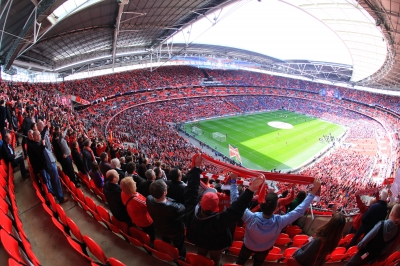
Make Use Of All Assets Teams with fan bases on social media numbering in the hundreds of thousands to even millions in some cases are to starting to realize the latent revenue windfall upon which they are sitting. Fans have taken the time identify themselves and have not only opted to see your content, but to consume and talk about it and share it. Through even free metrics and link tracking and just the most basic of impression analytics, there is tons of space to activate a sponsor or place a well-timed promotional message and/or valuable call-to-action. Fans consuming your content or entering a contest have identified certain things they value to begin with, namely game tickets/signed merch/etc., so giving a sponsor the opportunity to work themselves into the conversation of those things that carry positive weight for the fan is not only just a good opportunity to be seen, but to be seen through the lens of the team with which a sponsor has chosen to partner. This can be video pre-roll, a logo on a photo, isolating a play/photo/show of fan devotion/notable stat or insight, or any number of the tons of content that is being fed to, and provided by, fans (and shared by them) on a daily basis. Hundreds of thousands of fans will watch that pre game interview, even more the highlights or photos after a team victory, and just as many will engage in a contest to win something with tangential or direct relation to the team/players. The most efficient organizations are using every last impression and asset they have to activate more sponsors and more revenue. It’s a slow process as sponsors understand the value in the assets and salesmen understand how to pitch it and present its ROI (a long discussion here, but link tracking, CTR, conversion rate, and cost per lead are places to start; similar to a Google Ad campaign), but this gap does not need to last so long or remain so wide. sports venue To showcase how easy and potentially effective it can be to activate the thousands of impressions consistently given an existing asset, sponsor it..in-house! Where a video pre-roll for a sponsor product may go, put one for a ticket or merch deal for the team; enumerate a ‘fan of the game’ or ‘innovation of the game’ or ‘frozen moment’ or any number of pieces of content you’re already sharing with fans and brand it internally and show sponsors how that in-house branding/promotion can be theirs, for the right price. While 15-20,000 at your arena may see a Jumbotron or billboard ad, hundreds of thousands (at least 10-20,000 of which are in your sweet spot of geo-demo- segments; if not more) are seeing your web content, your tweets, your Facebook posts and, even better, are taking immediate action upon them and/or sharing them to amplify their reach (in a targeted manner, oftentimes) even more! Are you extracting value from all of your earned impressions? Start today. If the sponsors don’t understand it, show/teach them. The same must be done with the pitchmen. As social media continues to penetrate all facets of a team and organization, it makes communication and collaboration within the organization more important than ever. In the end, we’re all looking to sell to the greater community of fans, to grow that community, and to better understand what it values and wants. We’re all playing for the same team. Social media is about listening to the online chatter, but don’t ignore the several touch points and interactions happening at all levels of the organization on a constant basis every day! Make your organization social, too, and you’ll optimize throughout.

Clich here to see more of the No Biz Like Sports Biz series of posts

Posted by Neil Horowitz Follow me on Twitter @njh287   Connect on LinkedIn
No Biz Like Sports Biz, Part 6 of 8

There are so-called traditional marketing channels and then the new media marketing channels and, for whatever, reason the two are so distinctly different, they cannot be combined and integrated. Read that two more times and see if it makes sense. It’s all marketing the same product, but it sure doesn’t seem that way. The goal is to maximize impressions to maximize conversions to maximize sales to maximize, well, revenue, of course! The notion of ‘social’ marketing is, at its nuts and bolts, turning promotion into conversation, promotional material fans want to share. They may share it because it amuses them, because they understand it and know someone whom values it, or any number of things. The point is, if you’re not making all communications social and integrated, you’re not maximizing reach.
What this means is converting your Facebook fans to Twitter followers to email subscribers AND vice-versa! So many fans are only talking with you on social channels and, therefore, you’re missing out on the valuable targeting and segmenting and tracking opportunities offered by getting them on your email list. The other side, and one that is more ignored, is that you also have a big list of email subscribers who could be amplifying your message through their social networks, both on Facebook and in life!
In short, the insight here is to give your email subscribers simple instructions, a call to action, a transparent look at and reason for joining your social network; in turn, fans will be empowered to engage with you on the public networks of social media and you have new touch points and a new source of potential message amplification and construction of a super fan! Also, make your EMAILS social. What is the equivalent of a Facebook share or Twitter re-tweet over email? that ‘forward’ button of course! We obsess over the soft sharing metrics inherent in social media, but that does not seem to extend to that ‘forward’ button on an email. This is about as targeted and authentic social sharing/promotion you can get. But, just like asking fans to ‘like’ a Facebook post increases ‘likes,’ asking/suggesting to fans to forward your message/offer along (and giving them a reason/value why) and making it as clear and simple as possible for why/how to forward that offer/message along can be incredibly powerful and get you one more conversion, fan, subscriber at a time, if not more. Empower your fans to spread your message and market for you. Email is still king, and its penetration for the foreseeable future will always outdo its social media counterpart, but the viral potential of email is often ignored for its vast potential value; its potential to be social and shareable.
To find and create conversions, we’re on the constant prowl for impressions, impressions and more impressions; even if a minuscule % of fans seeing, let alone engaging with, your content will ever actually consider, let alone buy, a ticket to a game or piece of merchandise. But that doesn’t mean these impressions need to be value-less! New media is creating potentially valuable, measurable assets, thousands and thousands of impressions per piece of content at a time. Don’t let that potential revenue source go unused.

Clich here to see more of the No Biz Like Sports Biz series of posts


Posted by Neil Horowitz

Follow me on Twitter @njh287   Connect on LinkedIn

No Biz Like Sports Biz, Part 5 of 8

It’s The Little Things

This principle applies to both content and gestures. I’ll focus first on the latter and later on the former. Fans bleed for these teams, these players and the reminder that they’re acknowledged and noticed on an individual basis is as meaningful as ever (see the previous point on creating memorable experiences). Social media allows for so many touch points and so many opportunities to acknowledge fans at an individual level.
It has never ceased to amaze me the sense of appreciation, and often downright shock, fans often express when any sort of response is given to their inquiry/outreach.  This can be answering a seemingly dumb question, sending a DM to answer a question or provide a clarification, ‘favorite’ or re-tweet someone’s tweet, ‘like’ a fan’s comment on Facebook, responding to a fan’s comment on Facebook, responding to messages via DM & FB from your fans, following fans on Twitter or putting them on Twitter lists, giving prizes randomly to your biggest fans (or game tickets) to thank them for their support (though always be careful with ticket freebies in any case), and any number of seemingly effortless gestures.  It’s not you, John Smith, social media manager, responding to the fan; it’s their team that’s speaking to them. It’s also why a personalized autograph is better than one without the fan’s name. A hello from a player with eye contact means more than seeing them walk by and look away as they sign one piece of paraphernalia after another. Those little gestures stay with fans forever, give them a ‘wow’ moment, at times, and often leads to them interacting/engaging with you more (this is so consistent from personal observation, I’m positive of it; the same goes for social media contest winners), and telling their friends about the fact that their team wrote to them. It is this fanatical devotion and love for the team that inspires such sentimentality and we need to constantly remind ourselves that to live any aspect of life inside the walls of the team can mean the world. This is where the littlest things turn into content fans want to consume and share. Short on content? You are surrounded by it!

Crazy fans
Make Use Of All Content

Everyone has read the wild tales of fans preserving the towel with which the star player wiped his brow, the water bottle from which they drank, and G-d forbid, a tissue they used or fork they stuck in their mouth. It is this type of fanatical desire for anything connected with the players and team that makes it so easy in the world of social media to give fans a glimpse into the places they can’t go and information and stories to which they’ll never be exposed. Seeing what a player’s locker looks like, seeing the name plate on a locker, seeing the locker room bathroom even! The gym players use, the cars they drive to work, the food they eat for lunch. The stuff that makes the team tick – the control room where Jumbotron features are controlled, the mechanic room where the Zamboni is ripped open and repaired, the rack of sticks next to the tunnel, the equipment closet from which they came even, the TV on which they watch scouting video, the notebooks they study, the notebook used by the arena PA announcer containing their script, the motivational posters or sayings in the gym, the cones set up for pre game agility drills, the media scrums that are commonplace after every game and practice. OK, this list can go on and on and anyone who has worked in sports can add to it, to no end. The point is, whether through photos, text, videos, Vines, Instagrams, pins, Tweets, or anything, giving fans a glimpse of this seemingly mysterious, forbidden or special world of which they can only wish they were a part will reinforce that personal connection to the team/organization that we should all be striving for.  You can spend thousands on a produced video ad or promo, but it may not have more than a fraction of the effect and resonance of a candid photo of a player untying their skates after practice or getting physical therapy or riding a stationary bike.  Which takes more effort to produce and which gets more engagement?  So don’t ever think you lack content, you wake up, you do your job, it’s a normal day in the world of living the dream in sports biz…you have content gold to last for a lifetime. (George Costanza principle – “What did you do today?”… I woke up and came to a work… “There you go, that’s a show!”)  Fans have an undying thirst for content, for any insight into the team, anything which they can share with friends or tell/show someone because ‘this is cool.’  But you can’t forget that, despite the widespread awareness and increasing penetration of social media, there is still no more far-reaching and targeted form of communication than email. But a lot of email is about passing content and information too; it can be social too…

Clich here to see more of the No Biz Like Sports Biz series of posts


Posted by Neil Horowitz

Follow me on Twitter @njh287   Connect on LinkedIn

No Biz Like Sports Biz, Part 4 of 8

The Power of the Individual

Anyone who’s been paying attention the last few years, it is increasingly evident that the individual consumer, fan, voice is as powerful as ever. An organization never knows if that fan writing to you via Facebook or Twitter or any number of forums is the one who will spread a poor opinion of you virally and ruin your brand’s image, alienate followers, or any number of doomsday scenarios that have, at various times, actually played out. And, of course, it could just be a Twitter handle with an egg that leads to nothing. But business are treating the value and potential power of the individual as a negative, when it is instead something to be embraced and exploited, helped by social media (and email and phone as relationships develop). The two points I dwell on with individuals is: affect one fan at a time in a meaningful way and find the influencers.
The notion of identifying and mobilizing influencers/superfans/brand evangelists is a growing trend across all industries, including sports. In the unique field (no pun intended) of professional sports, there are a number of super fans (and more casual fans) that want to actively promote your team and your brand. There are also individuals whom hold influence over groups, event planning, and the like. The key is identifying and mobilizing these individuals. This is both a long-term process and a shot in the dark-type, low-cost effort. The former involves active listening and attention over time to all of one’s social networks and to identify the more active, responsible fans, engage them at an individual level (DM, FB message, and, eventually, email). From there, work toward an opportunity to be a group leader who can get a price break or VIP experience when they recruit ‘x’ number of friends to attend a game, help organize a tweet up of fans for a special event at a poor-selling (or sold-out) game and to help promote content and promotional offers. The individual attention, alone, given to the fan, will show them the value the organization holds for them and there is vast potential in identifying even one of these individuals who will buy a suite, organize a group outing, etc. Of course, there doesn’t need to just be super fans, there are those who look for events as part of their job.
While I have not yet seen it done successfully during my tenure, there are better and better ways to properly segment people and fans for prospecting through social media.  Spend 20 minutes a week searching for (on Linkedin, on Twitter, on Facebook, via Social Mention, Google search, etc.) and crafting a personalized message for, a local HR specialist in your area to suggest a group outing and offer, a youth league director to present a fundraising group buy, a scout leader, a teacher, etc. Think personalized pitch, both from the perspective of to whom you’re writing and showing you have an understanding of them on a personal level, you’ve taken the time to learn. The batting average may not be high on this stuff, but a couple of good relationships established from so-called shots in the (relative) dark can be lucrative in the long run. A big thing about fan engagement, overall, is creating the lasting relationship that makes one’s affinity for, a team in this case, a part of the fan’s personal identity.

Fan2
Without rambling too much, it all comes down to creating stories to tell, one fan at a time. Give a fan a lifelong memory which they’ll tell and retell to all their friends and family, at parties, whenever they see that photo on the wall or fridge, etc., and you have years and years of free promotion and mention of your brand.  It’s better than an old bumper sticker, it’s a testimonial, experiential advertisement for what you’re selling – ultimately, memorable, meaningful experiences. These don’t need to be of the grandiose nature like an autographed jersey or player meet & greet; even winning a random contest at the game (and having a photo taken, and even framed, to commemorate it), giving fans the opportunity to create post cards during the game (preserve your five seconds of Jumbotron fame to put in your office cubicle), tell that story about when you tweeted you were at your first game and all of a sudden you were taking home a signed hat. Work on creating one story at a time for fans to tell and empower them to share and preserve these stories for perpetuity.  You’ll always be front of mind and hold a special place in their heart. And that is ROI that is hard to come by without winning a championship! Titles come and go, but the littlest gestures and littlest things in this new age of social media and the individual go a long way. A segue to next my post…

Clich here to see more of the No Biz Like Sports Biz series of posts


Posted by Neil Horowitz

Follow me on Twitter @njh287   Connect on LinkedIn

No Biz Like Sports Biz, Part 3 of 8

Think Tickets

Unless you’re the Green Bay Packers or Toronto Maple Leafs or another club for which sellouts are a given, and even for them, selling tickets is job number one in the sports biz and social media can and should be a part of the sales funnel. The misconception is that marketers want to directly tie leads from social media and narrowly define this as the only way social influences ticket purchases. This can be short-sighted and sells short the potential value in ticket sales using social media.
Find a community, find a group. A lot of the most active (local) fans that interact on social media are either attending games or wanting to attend games whenever possible. Visitors to a social network do not have the same purchase intent as those opening an email, clicking a web ad promoting tickets, or those visiting the website. They do, however, identify themselves as fans and part of the community who, when given the opportunity, will entertain unique offers. Your Facebook discount offer should be treated differently from one placed with a radio station or sent in an email. A considerable proportion of fans of retail brands (40-45%, I’ve seen) cite discounts & offers as a reason for following on social sites, but, in sports, more fans have lasting relationships with the page and with each other. Show you know them by making more personalized offers.

Some quick ideas – create a quasi-CRM or data collection of which users are most active, investigate, and you may have a group leader on your hands; segment your users to as micro a level as possible and create offers targeted to niche communities, reach out to individuals who have expressed any remote interest in your team [Twitter, FB, Linkedin, etc.] and write a personalized note/offer, use powerful geo-based Twitter keyword searches to identify potential fans (and community influencers) Target the right influencers/leaders, take the time to make it personal, record it and keep it at a nano level. One carefully written message can deliver as much, if not more, than dozens of more generic messages shot in all directions. An element of exclusivity and the willingness to not be a ‘sellout’ [no pun intended] can go a ways too. Do not count on social media to sell 1,200 unused tickets, but, if you have a section of tickets [discounted or not, augmented value or not and priced appropriately] that are offered exclusively through social channels and find a good number that balances demand and (damn near guaranteed] sellout every game, it’s better than breaking the glass and doing a Groupon or deeply discounted SM offer that reeks of desperation.

As we listen better, target better, and learn to maximize every ounce of value there to be taken, social can deliver tons in the ticket-buying medium, let alone for potential premium ticket holders and season ticket holders. Connecting those that want to share, learning more about them, the list goes on. But the age of the discount in sports is not sustainable. It’s more about adding value now and nowhere does making $$ beyond tickets (and selling beyond the ticket) hold more latent potential than in the realm of social media.

sports tickets
Think Beyond Tickets

Between secondary markets, discount sites and a growing expectation to receive a constant stream of discount offers, the trend has been training fans to believe tickets retain value about as well as the US dollar (not good!). Some of this is because the market is getting better at pricing tickets, especially when they otherwise go unsold at face value, because there are a lot more fans [especially on social networks] who want to interact and engage with the team, but are comfortable watching the game at home next to a shrine of team swag donning a jersey…and saving the money on tickets. Similar to the fans for whom attendance is not a feasible option, these fans still want to support the team and may be enticed to give game attendance a swing more often than not when they’re getting more than just a ticket.

Promotional giveaways, especially for unique and novel items not normally owned or sold, can be a fantastic way to make the ticket-buying experience more memorable and give fans a reason to get tickets to a game. A ticket package that includes an exclusive bobble head or pre/post game experience, novelty item, chance to win something, etc., is selling more than the ticket and offering something exclusive. Even better, let fans on social discuss and have input into some of these upsells of items and experiences and seat upgrades and perhaps some other ideas fans may suggest. And don’t underestimate the potential value in the most mundane things and experiences. A $10 off offer may not do as well as a ticket page that adds $10 and includes a bobble head offered only through FB, selected by vote by FB fans. And, while this stuff can be good to reserve for season ticket holders (and should be used), take advantage of every experience possible and use it: high-five players during intros, stand next to them during the National Anthem, say Play Ball, be a guest bat boy, get a pregame locker room tour, broadcaster meet & greet, etc. These can be built into ticket-buying experiences to add value and can even involve sponsors (hello – pre game buffets, a tablet at your seat?, all you can eat seats, souvenir beer mug with your seat, pre game receptions off-site at sponsor location or on-site with sponsor product, etc.).
Everyone is looking for a unique experience now; something to boast about, post a photo of to Facebook or Instagram, a story to tell to amuse or impress and a unique piece of paraphernalia or memorable experience can give them that. Heck, give each fan a free framed photo to commemorate their experience they can hang in their house and you have a story, with your brand weaved in, they’ll tell every time someone asks about it (or it jogs their memory every time they walk by).
Don’t stop thinking of ways to: add value to tickets and game attendance experiences, always be giving fans stories to tell and stuff to share and boast about, give fans something to take away to help them tell that story, and empower fans with tools to facilitate them sharing/telling those stories. I saw a team offering photos of fans featured on Kiss Cam recently and love that idea. That will be emailed to family, posted on Facebook, stuck on the fridge, and will be a story to tell forever….about how much fun that game was.
It really is all about touching every fan in a sentimental way, one individual at a time. A preview of what’s next in this series of ramblings…

Clich here to see more of the No Biz Like Sports Biz series of posts


Posted by Neil Horowitz

Follow me on Twitter @njh287   Connect on LinkedIn

No Biz Like Sports Biz, Part 2 of 8

Mobile E-Commerce

The numbers are staggering. Whether consumers are watching TV, walking in a store, or sitting in the arena, they have their mobile devices with them and an increasingly higher number are wanting and willing to use them as much as possible. As the baby boomers retire and the next generation starts raising families, the density of fans/consumers fluent in this technology will only increase the opportunity to encourage and engage in mobile e-commerce. Of course, this all sounds good, but where and how to begin is the issue for most.
In the near future, mobile concessions ordering will be a norm, particularly for premium seating. But, as technology improves, so will a team’s ability to encourage, and facilitate, impulse buys. An in-arena announcement to order food or a single merchandise item featured at a discounted price without having to leave your seat could be tempting and even good for data gathering. Instant calls to action from broadcasts to fans back home open up a ton of opportunities as well to the fans accustomed to holding tablets while watching TV at home. This does not mean ‘Use this hash tag’, this means ‘Open this App before the end of the game’ or ‘Text this’ or ‘Go to this site.’ It’s ok to be sales-y during a commercial, it’s expected, and, as we’ve learned through the simplest analyses of Facebook posts and web ads and the like, giving fans instructions (like this, click this, share this) can have a noticeable effect on taking the desired action.

Sports business commerce
International Fans

It has been an eye-opening experience to see the size and devotion of communities around the world supporting teams thousands of miles from where they live. They watch games, visit the websites, wear the merchandise, and follow the players with as much avidity as a season ticket holder (and they would love to be one, if geography permitted). While I may not have the expert ideas to get to it, there is untapped value here.
Thousands of web and social media impressions and hundreds of fans that, when given the opportunity, love being able to buy unique items, feel connected to the organization, and be empowered to promote your brand or interact with the existing community in their locale. There is also the opportunity to engage sponsors across the web and mobile space who can find value from your non-local fans through online transactions and engagement. If hundreds of thousands fans/consumers are within your channels of communication, give them value and give them an opportunity to receive, share, and act upon personalized offers for merch, kits and more. European football teams have done this, to some degree.
If you have hundreds of thousands of fans and impressions, there is likely a lot of fans who can’t attend games, but can still bring great value to the organization. A nice transition to my next point of thinking clubs will find a way to show sponsors value in these earned impressions.

Every organization will be a media/content producer in the years to come and, for sports clubs, this already is an inherent part of the business (press releases, transactions, game results, etc.). Add to that a receptive fan base eager to consume even the most mundane content, and to spread and discuss it, and you have the potential for thousands of engaged consumers with article views, clicks, and, potential activations. This is already happening, but will continue to spread and get more creative and weaved into the context of the social community more (i.e. connecting brand’s values with sport and/or team). And, of course, promotional offerings will be better targeted, more personalized, more track-able and, in time, will show to deliver better conversion rates than traditional ads that fill the spam of web pages and snail mail.
I don’t want to presume a bastardizing of all social web interaction with ads, but, instead, smarter ads, interactive ads, activations that give and create content and offer something it’s known fans will value.

Posted by Neil Horowitz

Follow me on Twitter @njh287   Connect on LinkedIn

No Biz Like Sports Biz, Part 1 of 8

Something of a “manifesto” about sports business that I penned in February…

Sports and social media have been great partners from the beginning, as the two have evolved the way we communicate, discover, interact and even do business. Sports has led the way because sports fans are the original brand evangelists. It’s not enough to be a Yankees fan, everyone you know has to believe the Yankees are the best for ‘x’ or ‘y’ reasons. With that framework in mind, here are some thoughts as to where the evolutionary path of social media, social business and brand/team communities can develop through the prism of sports.

Part I 
Monetize Mobile

This isn’t a revolutionary idea, but is one often overlooked or lacking focus, at times. One thing that is only going to get more concentrated is the ubiquity of mobile devices everywhere one goes. Some teams are jumping into the paperless ticket space, which can help cut down on costly ticket printing, shipping, hassle of fans printing, and, of course, the secondary markets and scalping. Others have developed Apps, which serve fans all types of team content, from videos to live stats and radio streams and ticket purchasing options. But, as a whole, there is still relatively little revenue coming from all of fans’ mobile activities and that is something that should undergo rapid change in the next few seasons in all pro sports (and is already happening as marketers adjust budgets).
The ultimate destination for mobile, contingent on privacy concerns, are to serve as a way to track fan activity as much as possible, to better learn about them and give them what they want. This could mean scanning an RFID on your mobile device at select sponsor locations (or show a mobile coupon) to add value to sponsors, using it to work toward rewards in purchases [and allowing to track volume and type of ticket/merch purchases] and everything in between.
The other thing mobile does is allow teams to have a direct channel to fans not just within traveling distance of games, but everywhere around the world. The Ducks alone had mobile app users [and social media fans/web visitors, of course] from nearly 30 countries.  Of course, social media opened such vast lines of communication as well, which is a segue to my next point…
Sports Business

Finding and Empowering Brand Ambassadors Outside The Confines

While building up a localized fan base of season ticket holders and others that regularly attend games is of utmost importance, one area in which teams have much room to grow in this new age of two-way fan to community to club communication (aka social media), is developing relationships with and, ultimately monetizing, the huge number of fans that live beyond the borders of game attendees.
Several pro sports clubs have Facebook fan bases that number from 200,000-2,000,000, with about 20-30% actively interacting with the page at any given time and a bit less than that seeing each post (short of promoted posts), yet, though it varies a great deal, not many of those are supporting the team directly. Sure, they may buy a cap through the league’s online shop or sport a t-shirt around town, but most will jump at the chance to buy fun and exclusive items they can’t find elsewhere and to support the team in other ways. What could this mean? Any number of things: bi-weekly merchandise offerings to fans of out-of-state or out-of-country fans, facilitating localized fan clubs to whom sponsored offerings, merch/club kits can be sold, road trips to a game, partnering with local sponsors to support watch parties (or national partners gaining more value) or provide coupons, and, in turn, increasing the size and depth of those non-local fan bases and increasing social community populations and traffic to the team website. (a mouthful, there) Simply taking the time to exhibit photos of all items from a club’s arena store [to serve as an online catalog to show non-local fans items to purchase, since, for some leagues at least, revenue from the online shop mostly goes to the league] is a simple way to drive revenue. There are tons of fans with enthusiasm that are dying to support the team. It may not make millions, but it can go a long way and build up over time. Don’t neglect these non-local fans that you can now easily reach on social media.

Clich here to see more of the No Biz Like Sports Biz series of posts


Posted by Neil Horowitz

Follow me on Twitter @njh287   Connect on LinkedIn

Social Media ROI One Fan At A Time

Re-telling a story I told during my time with the Anaheim Ducks in Fall 2012…

Fans Hockey

Fans on social media are willing and potential “Brand Ambassadors” and they are superfans who want to help spread your message and brand so utilize them! Here’s an anecdote from Wednesday night –

1) Using Twitter Search to find hockey and/or team-related tweets within a stipulated radius of our arena, I located a fan tweeting [with a few of our superfans we follow no less] about ‘choosing’ a SoCal hockey team.
2) Followed potential fan from team account
3) Replied to potential fan with comment and link to one of our pages highlighting our Social Media friendliness/aptitude.
4) Fan noted the following and reply and superfans chimed in touting the team’s general awesomeness
5) Fan follows us, begins using multiple team-related hash tags, tweets he now loves this team, and, since the team account began following him, I was able to see him make plans to attend a game or two and make a trip to the Team Store to buy a bunch of team merch.

Don’t underestimate the power of social media and your superfans wanting to spread the word. These exchanges can be amplified on social and encouraged, whether they’re happening in a cyber or physical environment. Active listening + empowering and enlisting and engaging brand ambassadors + showing fans you care/value them matters and can lead to direct $$ through merchandise, game attendance and, even better, getting a fan on the first rung of the fanhood scale, on their way to becoming a superfan too!


Posted by Neil Horowitz

Follow me on Twitter @njh287   Connect on LinkedIn